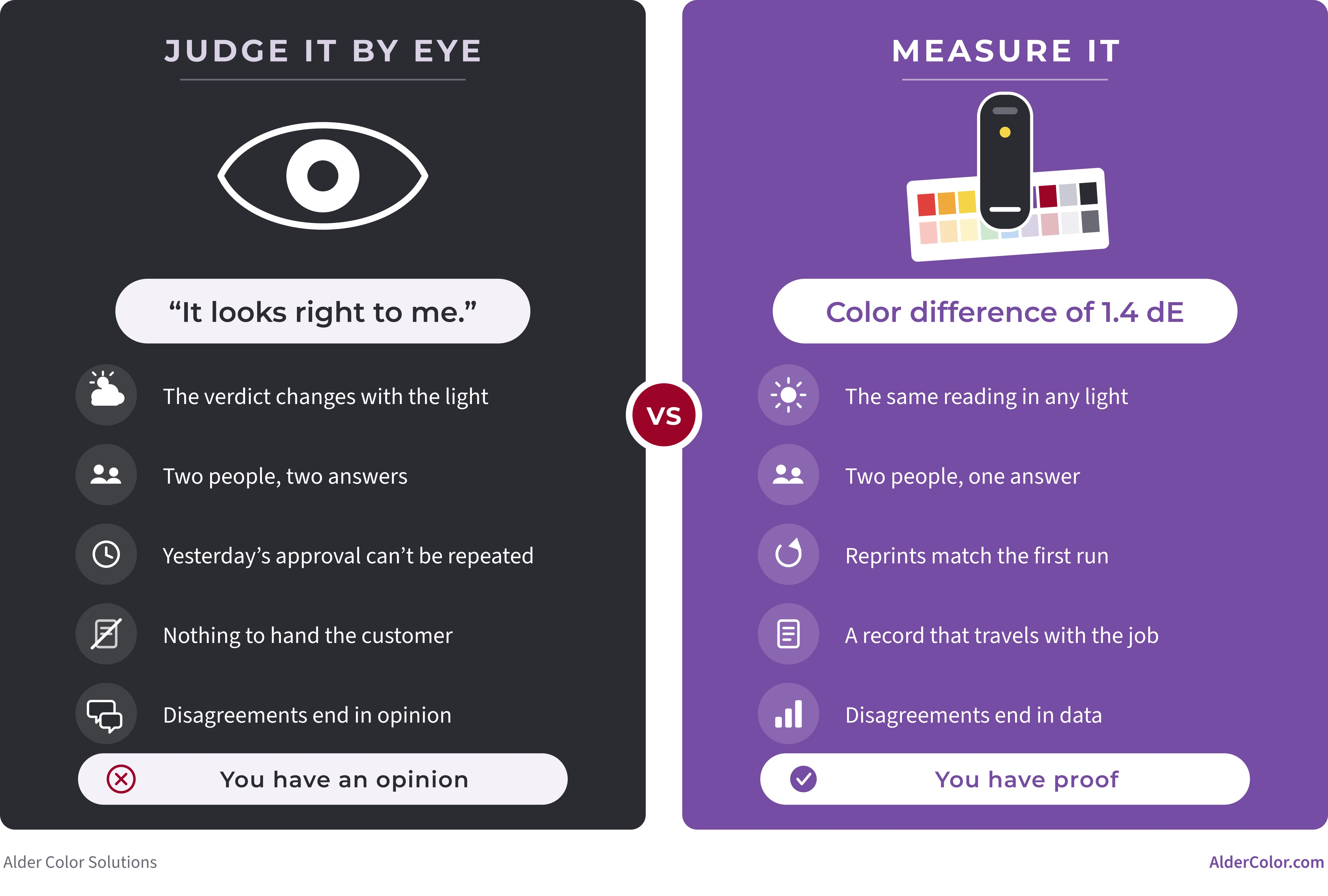
Do You Measure Color, or Do You Eyeball It?
Five questions that reveal how well your shop really controls color, from visual matching and display profiling to density vs. L*a*b*, calibration, and verification.
The Alder Blog
Guides, product news, and real-world case studies on color management, G7 calibration, large-format printing, and the software that keeps your print production consistent.
Try a different topic or clear your search.
Five questions that reveal how well your shop really controls color, from visual matching and display profiling to density vs. L*a*b*, calibration, and verification.
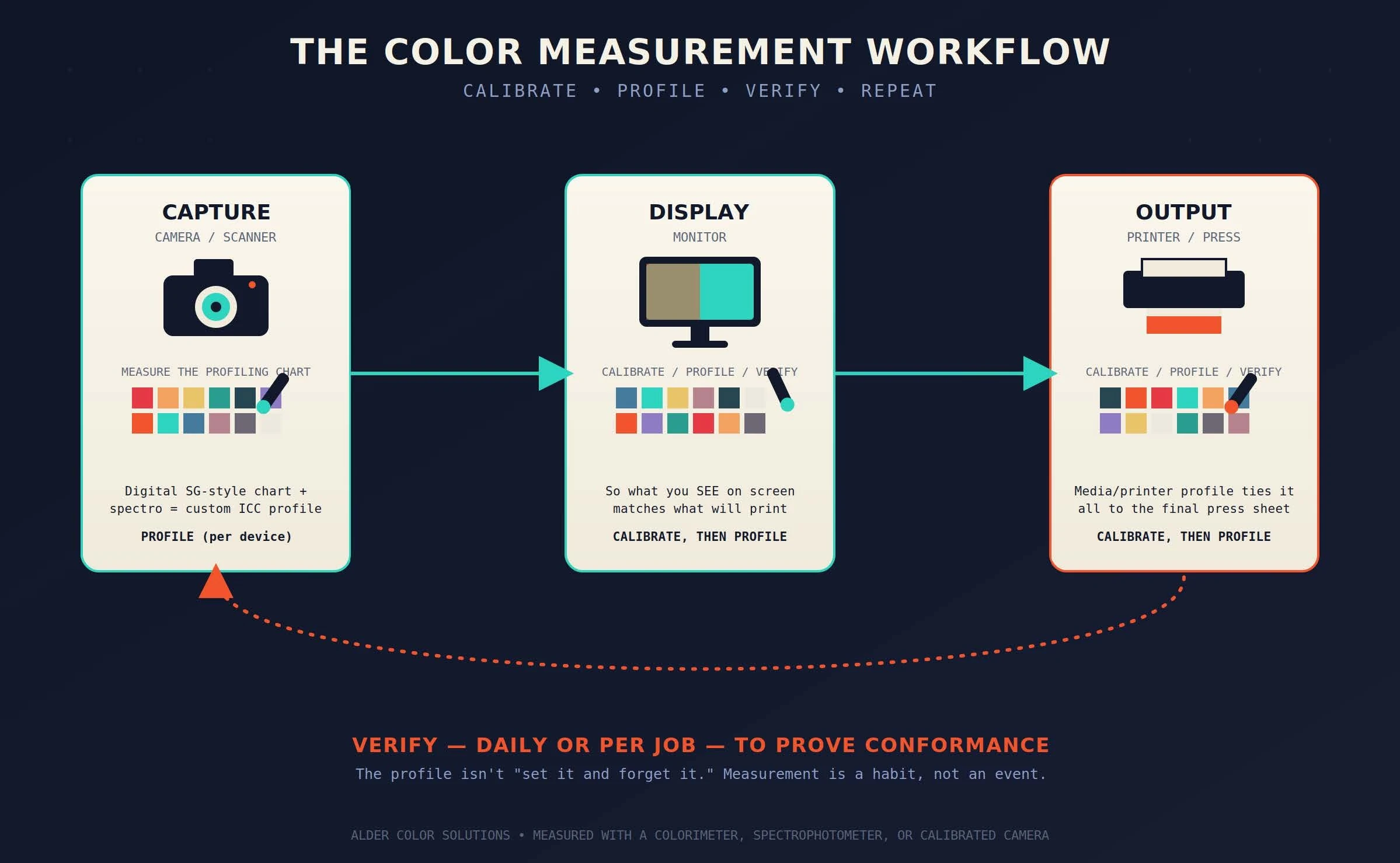
Color management isn't a mystical black box. It comes down to one unglamorous activity: measuring color, over and over. What to measure, how often, and why verification is the real job.
Xitron adds K2D-X for multi-DFE digital print production and K2 3.0 for more automation, a vendor-independent way to standardize prepress across mixed-vendor presses.
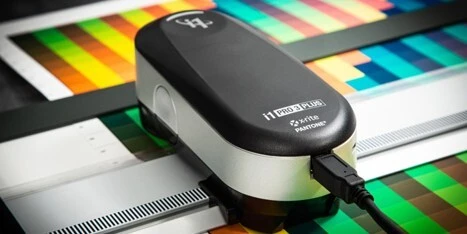
If your shop verifies color with an i1Pro1 or i1Pro2, there's a Windows 11 driver-signing change worth knowing about before it finds you mid-shift. Here's how to identify your instrument and plan ahead.
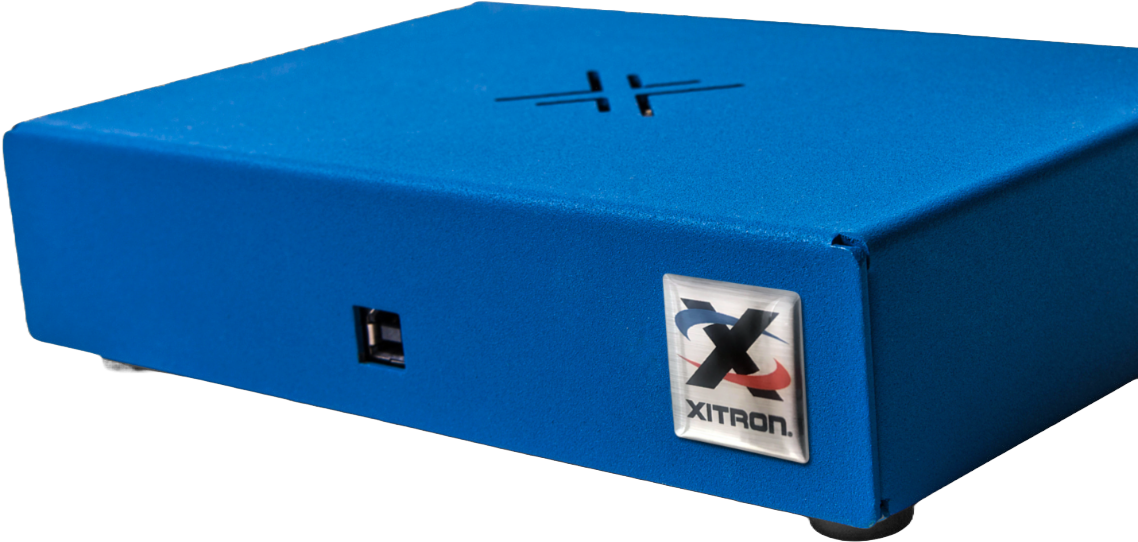
If you rely on the Xitron USB "Blue Box" for plate output, a recent Windows 11 change needs your attention before it reaches your machine.
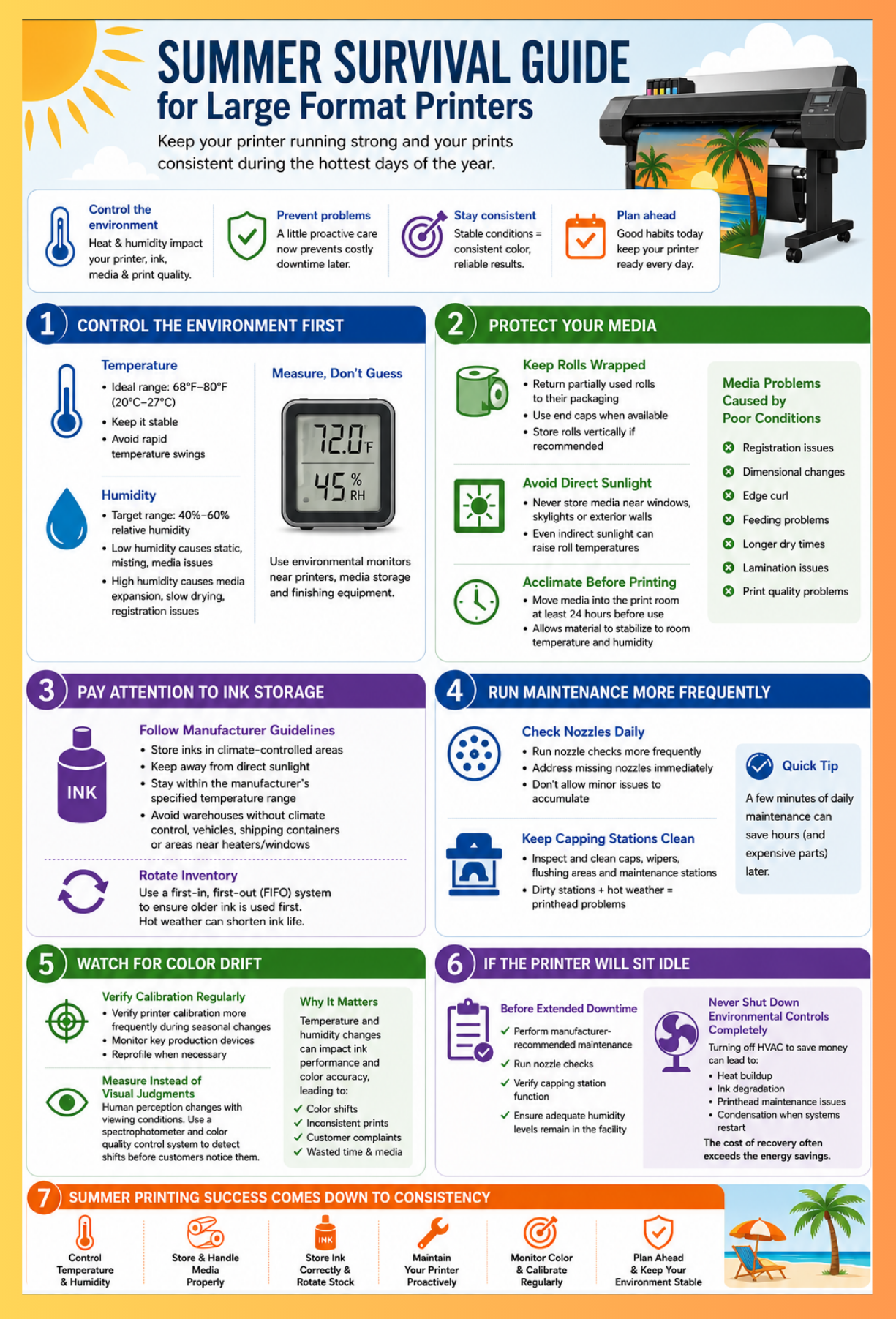
Hot weather is tough on large format printers. Whether you run eco-solvent, solvent, UV, latex, or aqueous devices, heat and poor environmental control can cause color shifts, nozzle issues, media problems, and costly downtime.
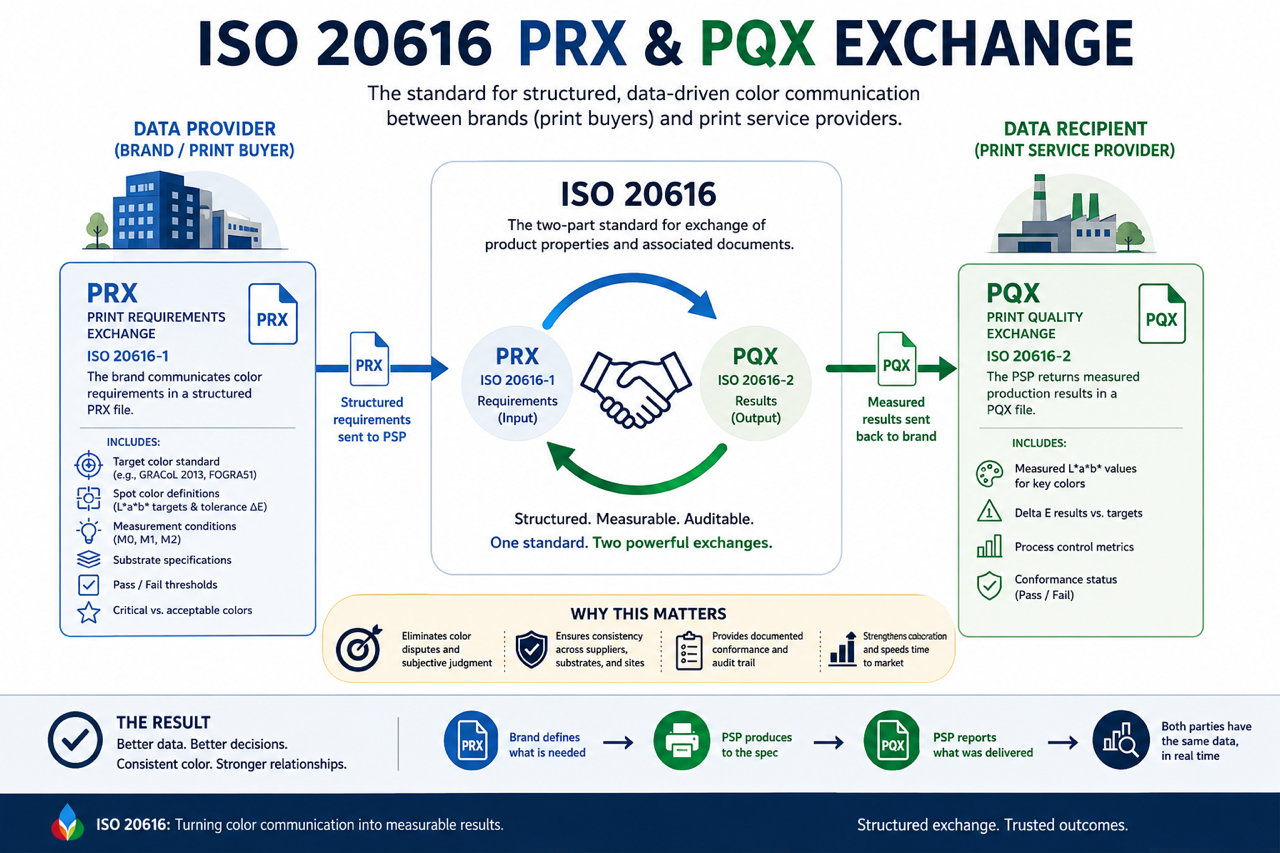
ISO 20616 is a two-part standard that defines a formal, structured language for color communication between a print buyer (the brand, agency, or print buyer) and a Print Service Provider (PSP).

Color is no longer just a quality metric; it's a contractual expectation. Brands demand consistency across runs, substrates, and devices, and "close enough" doesn't cut it anymore.
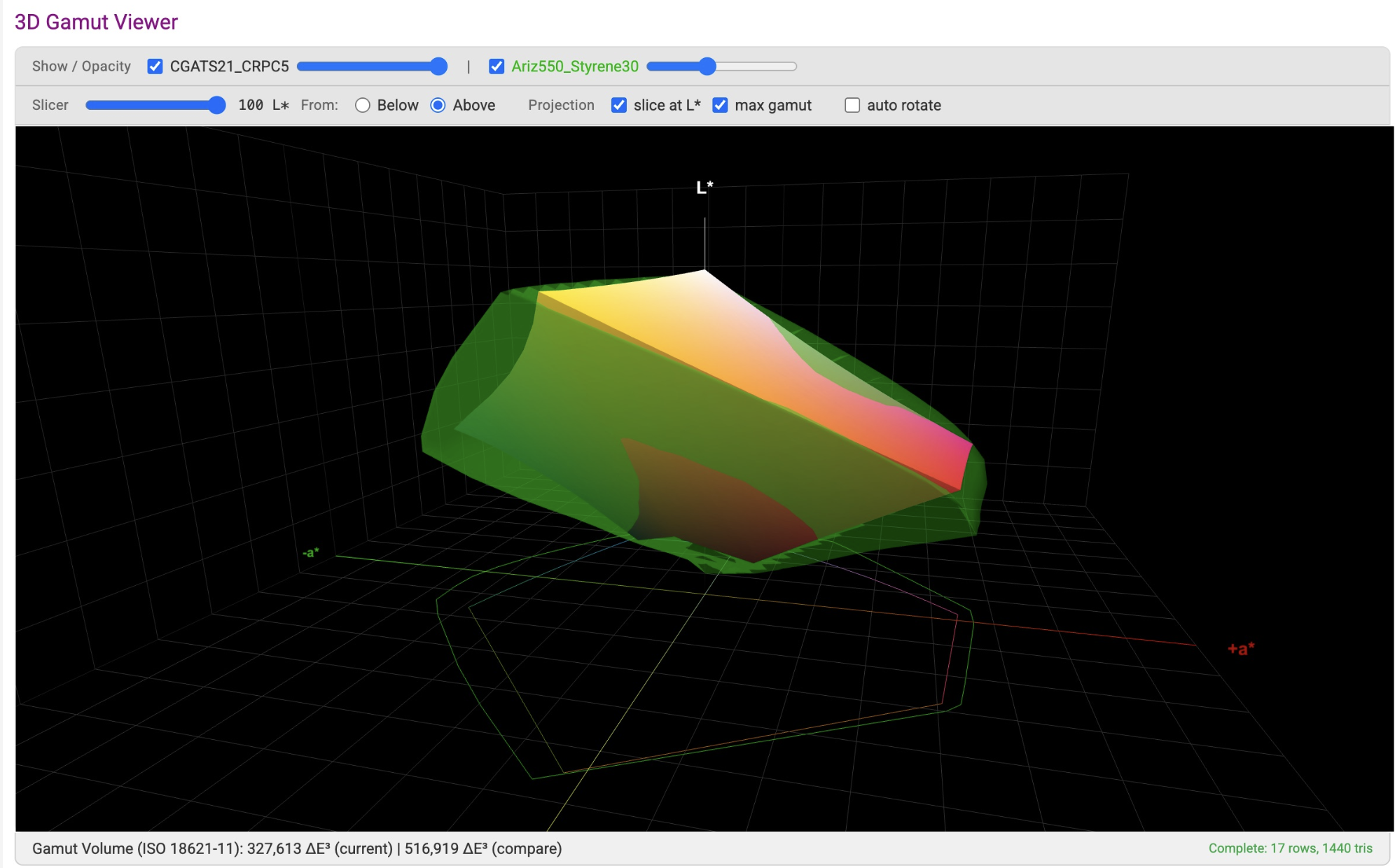
A look at ChromaChecker's new 3D gamut viewer, from a team that runs its own branded ChromaChecker instance across dozens of client accounts and all of our professional services.
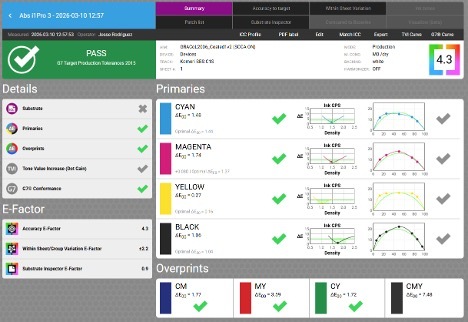
Absolute Packaging in Anaheim partnered with Alder Color Solutions to improve color management across multiple print platforms. A packaging prototyping install quickly grew into a multi-phase color optimization initiative.
Due to essential system updates at Fiery, LLC on April 14, 2026, all versions of Fiery XF 7.0–8.0.5 must install the Fiery XF 2026 Essential Update. Servers that aren't updated will lose access to available updates and more.

Epson's new S Series signage printers differ from the S80600 more than you might expect. A close look at what changed.
How Datacolor's Techkon acquisition and Konica Minolta's MYIRO discontinuation are changing color management.
When color varies between devices, facilities, or operators, the issue is almost never the file alone. It's the absence of a standardized system.
Choosing between FOGRA39 and FOGRA51 comes down to your presses, your paper, and your measurement mode. Here's a clear breakdown of what each profile is, how they differ, and when to use which.
An ICC profile is a mathematical description of how a device reproduces color, whether that device is a printer, monitor, camera, or scanner. It lets color-managed systems translate color accurately between devices.
There's a surprising amount of variety under the generic label SBS C1S (solid bleached sulfate, coated one side). A rundown of the main global mill brands and how they differ in color, brightness, weights, surface, and finishing.
If you've ever held a press sheet next to your contract proof and wondered why two "GRACoL" outputs don't match, you're not alone. Here's what's going on.
Both are color-quality tools for print, but their sweet spots differ enough that they can compete head-to-head in some workflows and complement each other in others.
Color drift isn't caused by one thing. Environmental changes, device wear, media variations, ink batches, and operator differences gradually push your output off target.

A vehicle wrap shop running three Epson S60600 printers with ONYX Thrive put PrintFactory to the test. Here's what it did for their ink consumption.
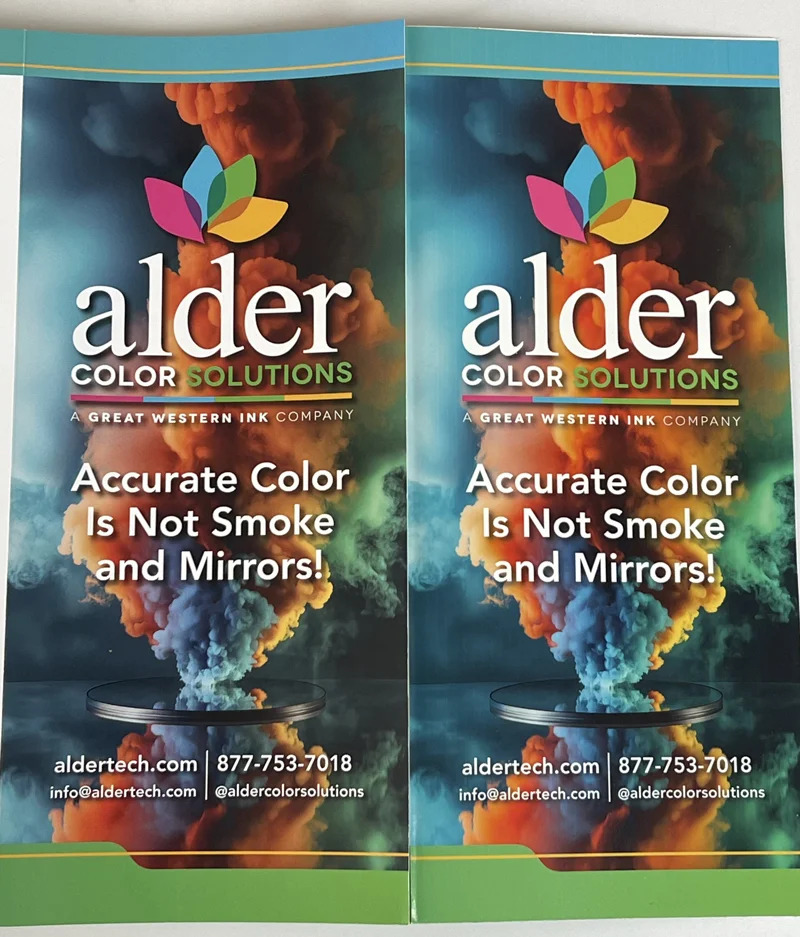
How G7 process control and standardized color management produced a nearly perfect match between a verified proof and the final printed brochure.
How cloud-based color management helped a global brand standardize packaging print quality, reduce press checks, and speed up approvals.
A century of innovation, quality, and sustainability has made Great Western Ink a trusted name in printing and ink manufacturing.
Xitron K2 brings PDF workflow automation, prepress tools, and scalable RIP technology at a fraction of the cost of enterprise solutions.
Step-by-step: download, install, and use ICC profiles in Mimaki RasterLink 7 for accurate, reliable color.
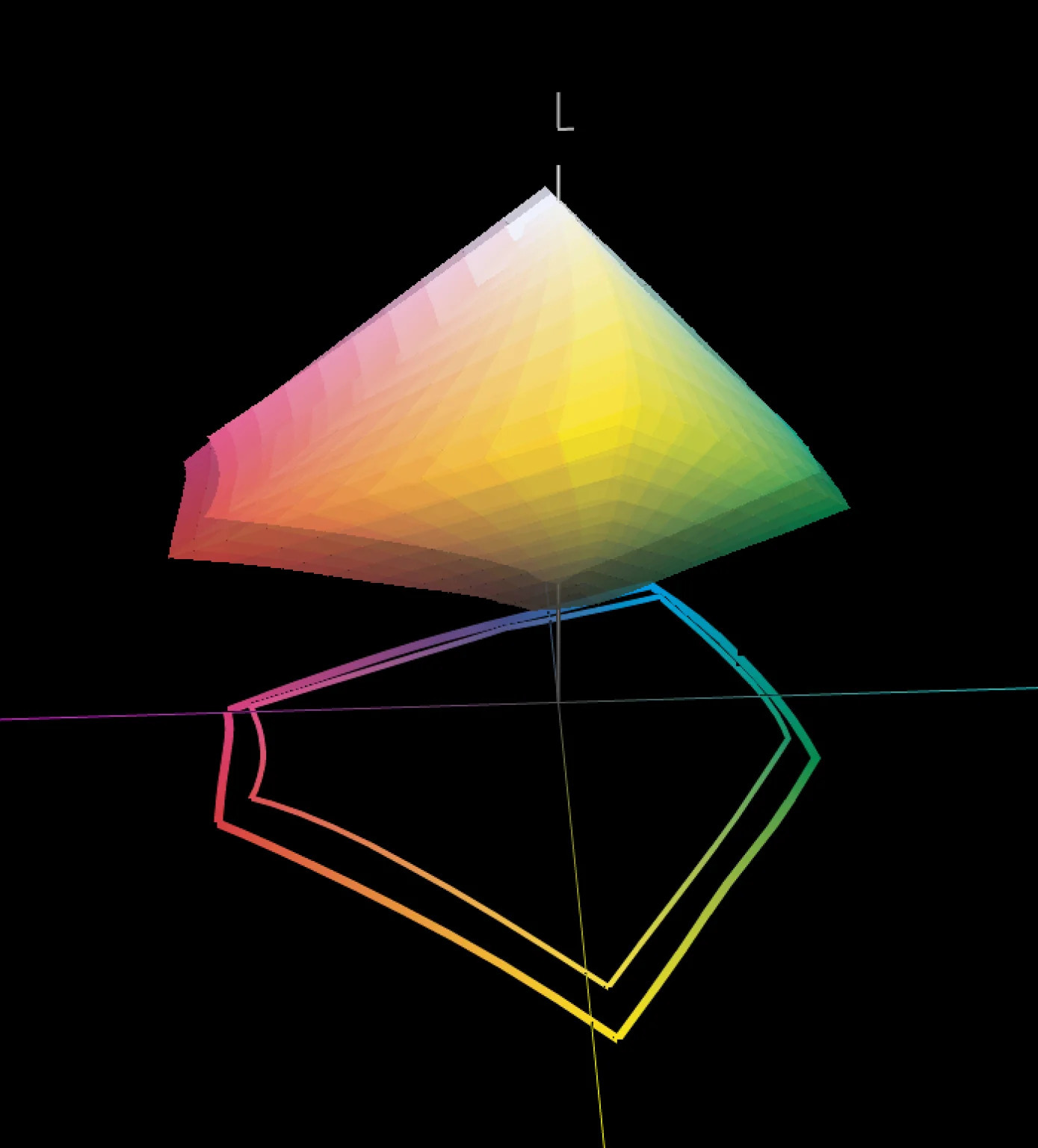
The new Alliance_UC_UV characterization expands the color gamut for UV inks on uncoated paper. What it is and why it matters for commercial printers.
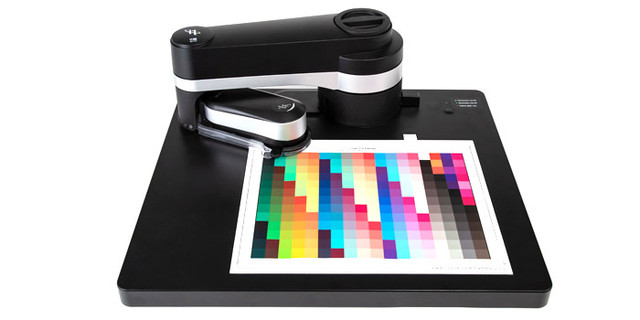
How a spectrophotometer improves color accuracy and consistency for designers, printers, and photographers.
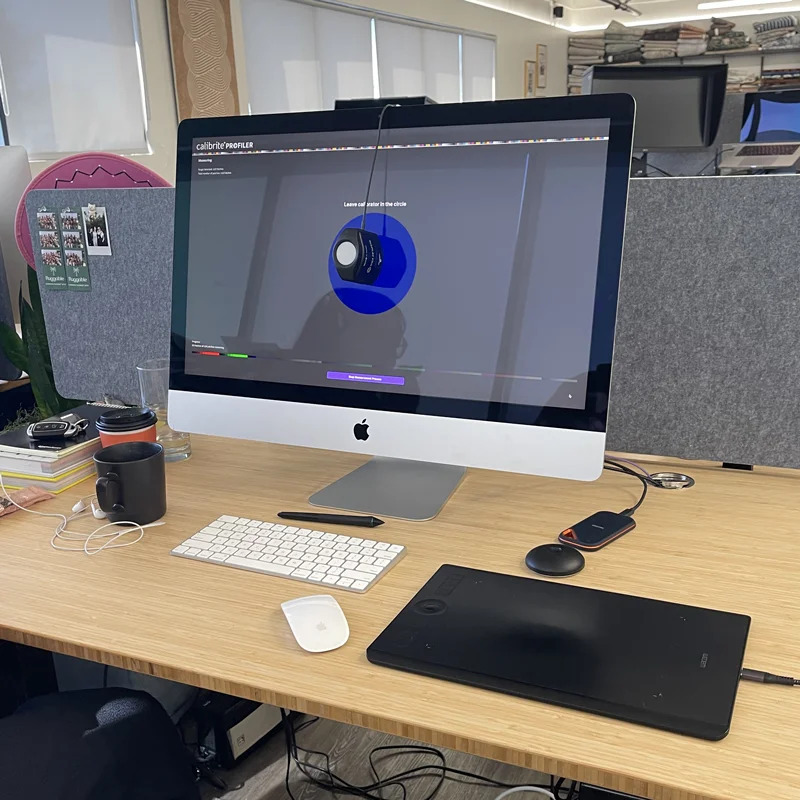
How end-to-end color management helped a global home décor brand improve accuracy, cut production time, and standardize its workflow from photography to print.
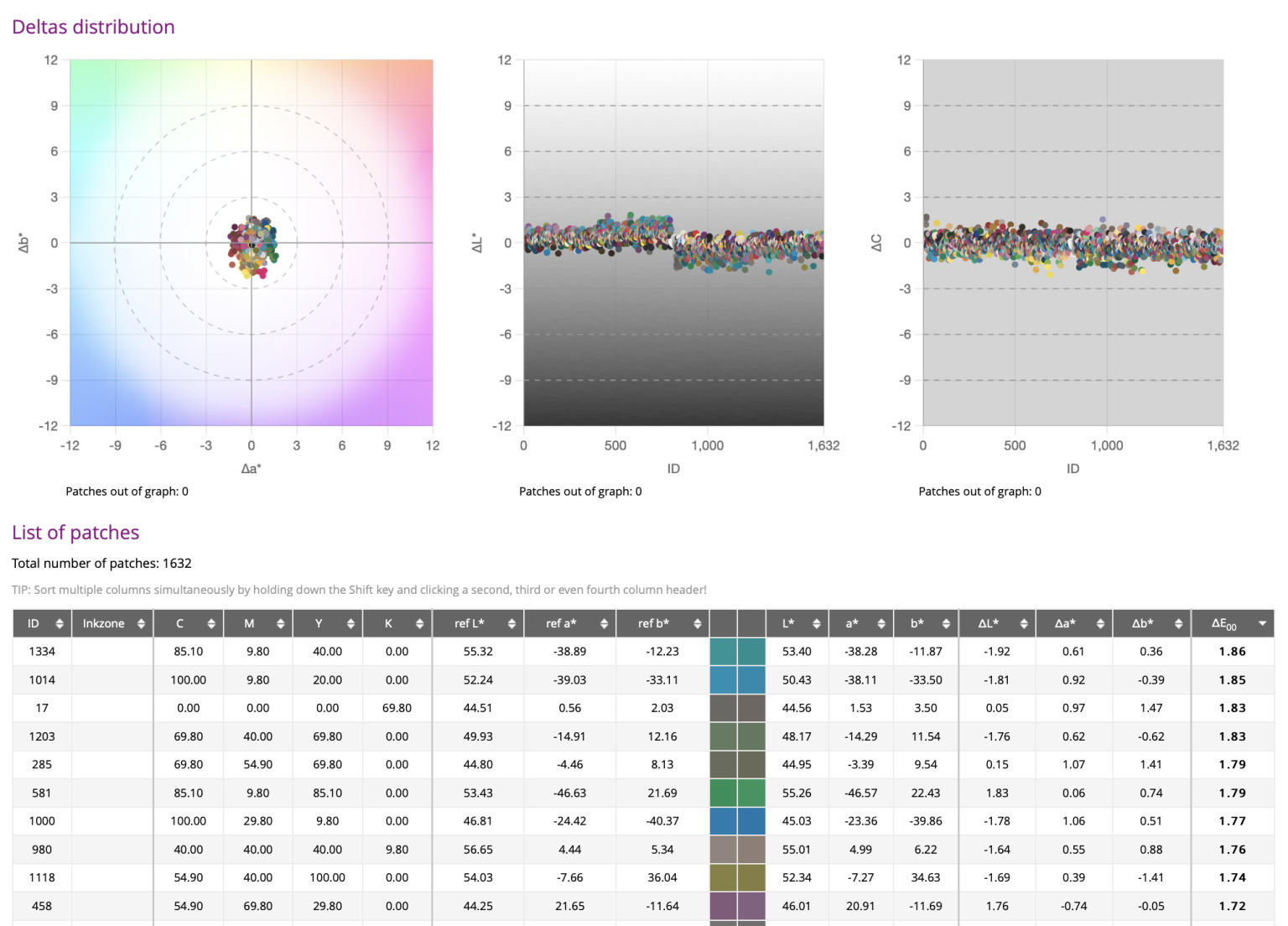
Think your inkjet proofer is dialed in? How to verify G7 proofing accuracy and GRACoL CRPC6 conformance, and tighten up your proofing workflow.
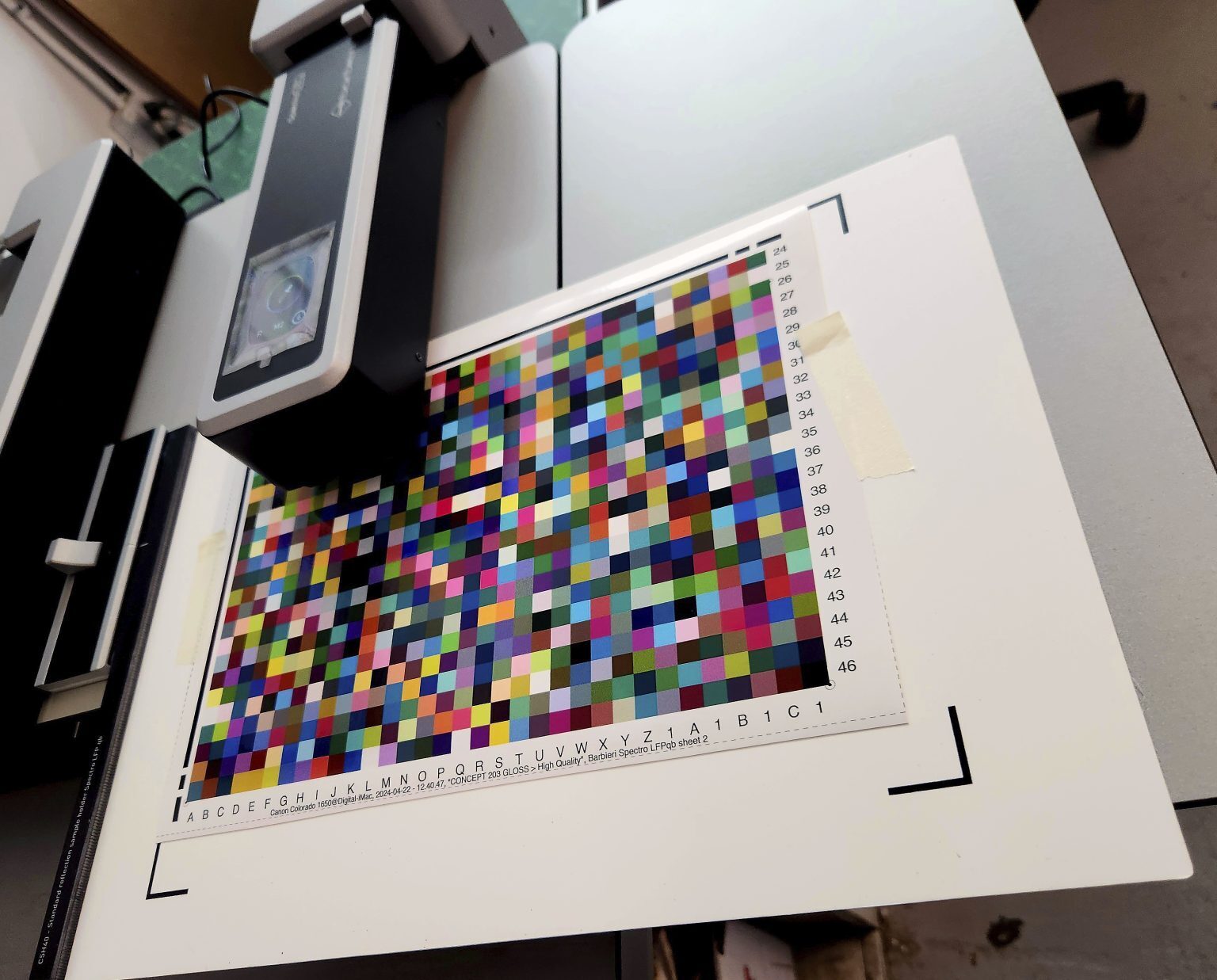
How PrintFactory cut ink consumption by 43% while improving color accuracy and workflow efficiency for a commercial print provider.
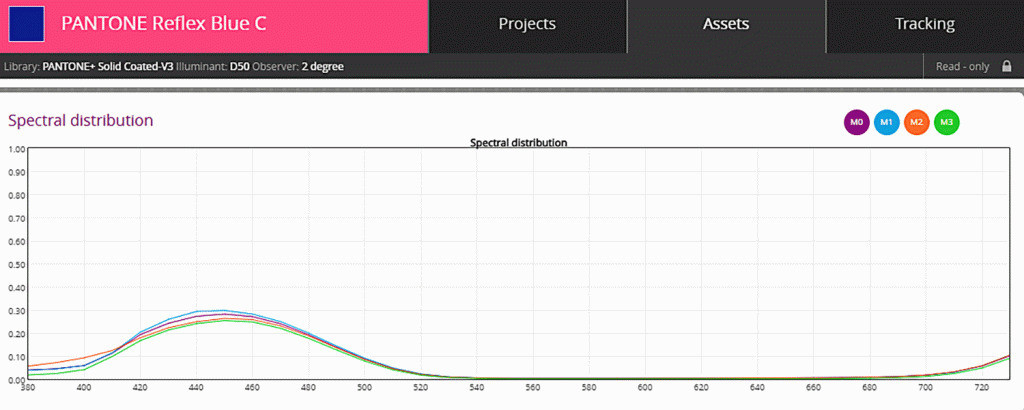
When to use M0, M1, M2, and M3 measurement modes on your spectrophotometer, and why the choice matters for color verification.
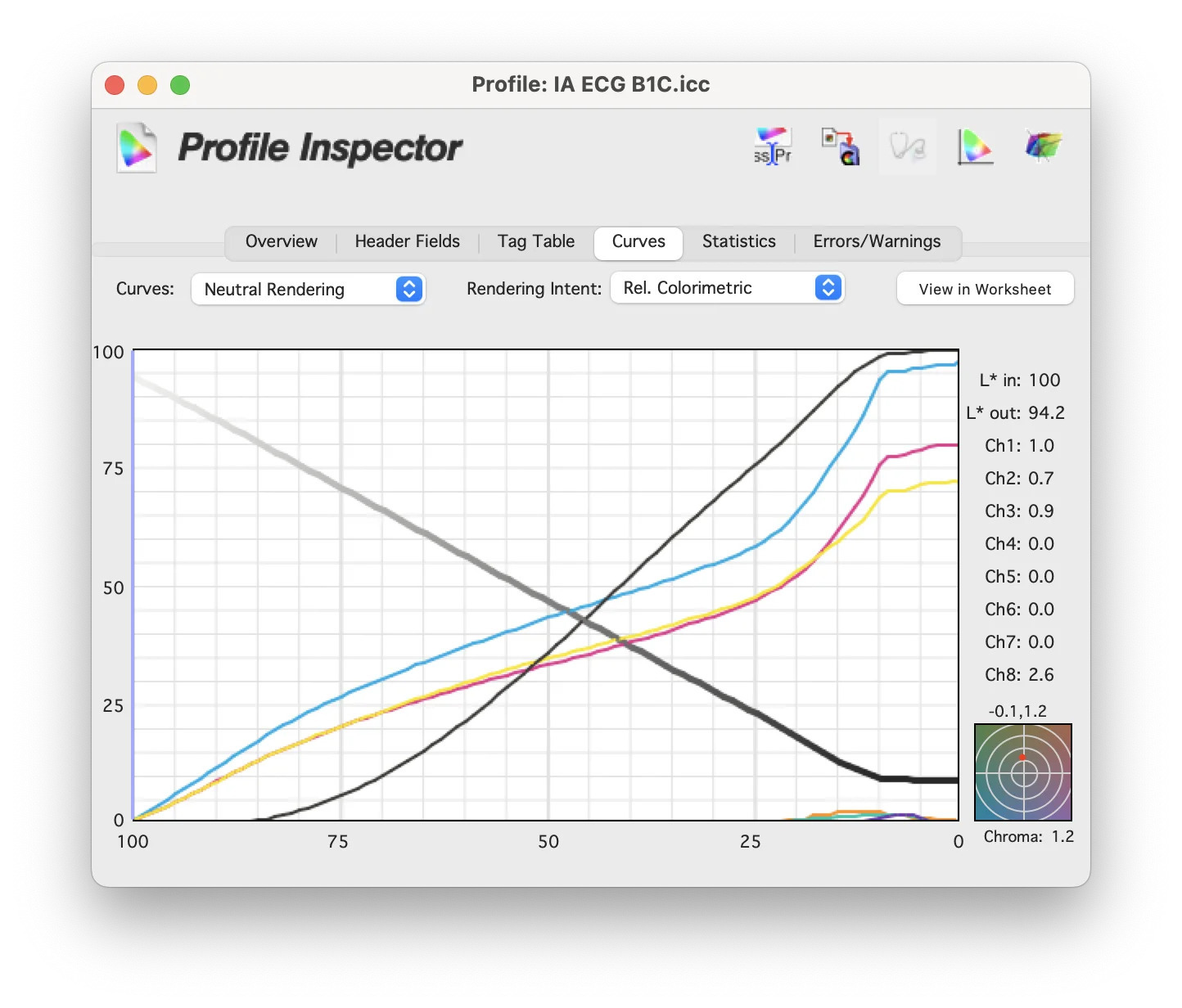
What separates the IDEAlliance ECG B1C and B1C X profiles, how their GCR settings differ, and what that means for extended color gamut separations.
Why one control strip, the ChromaChecker CC84 with every G7 gray-finder patch, can handle both G7 calibration and everyday print process control.
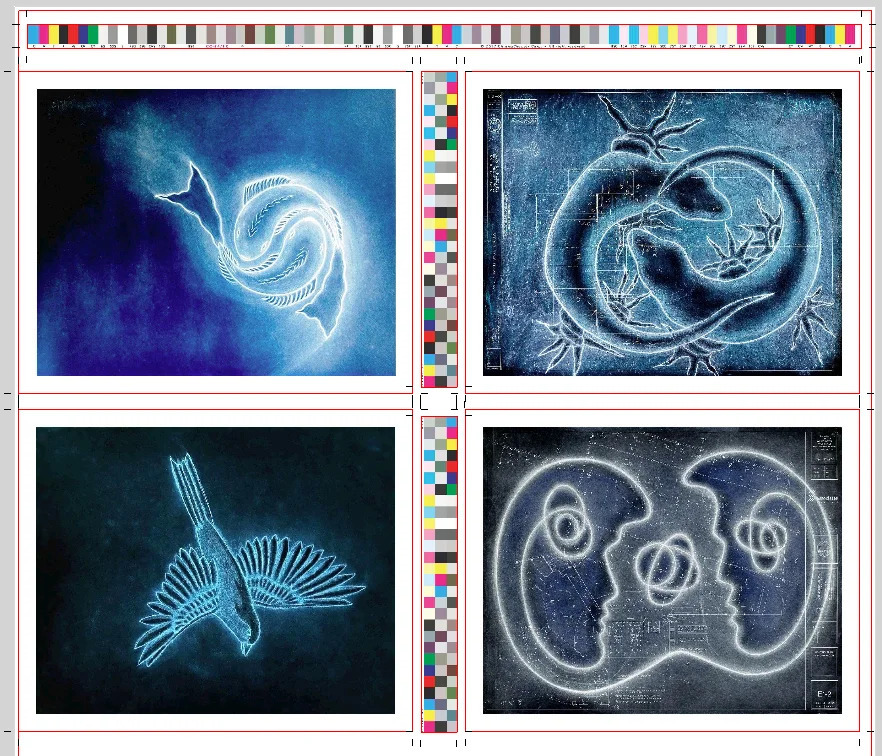
Generate G7 correction curves from CC84 control strips on production jobs, so you can adjust press calibration without stopping for a test run.
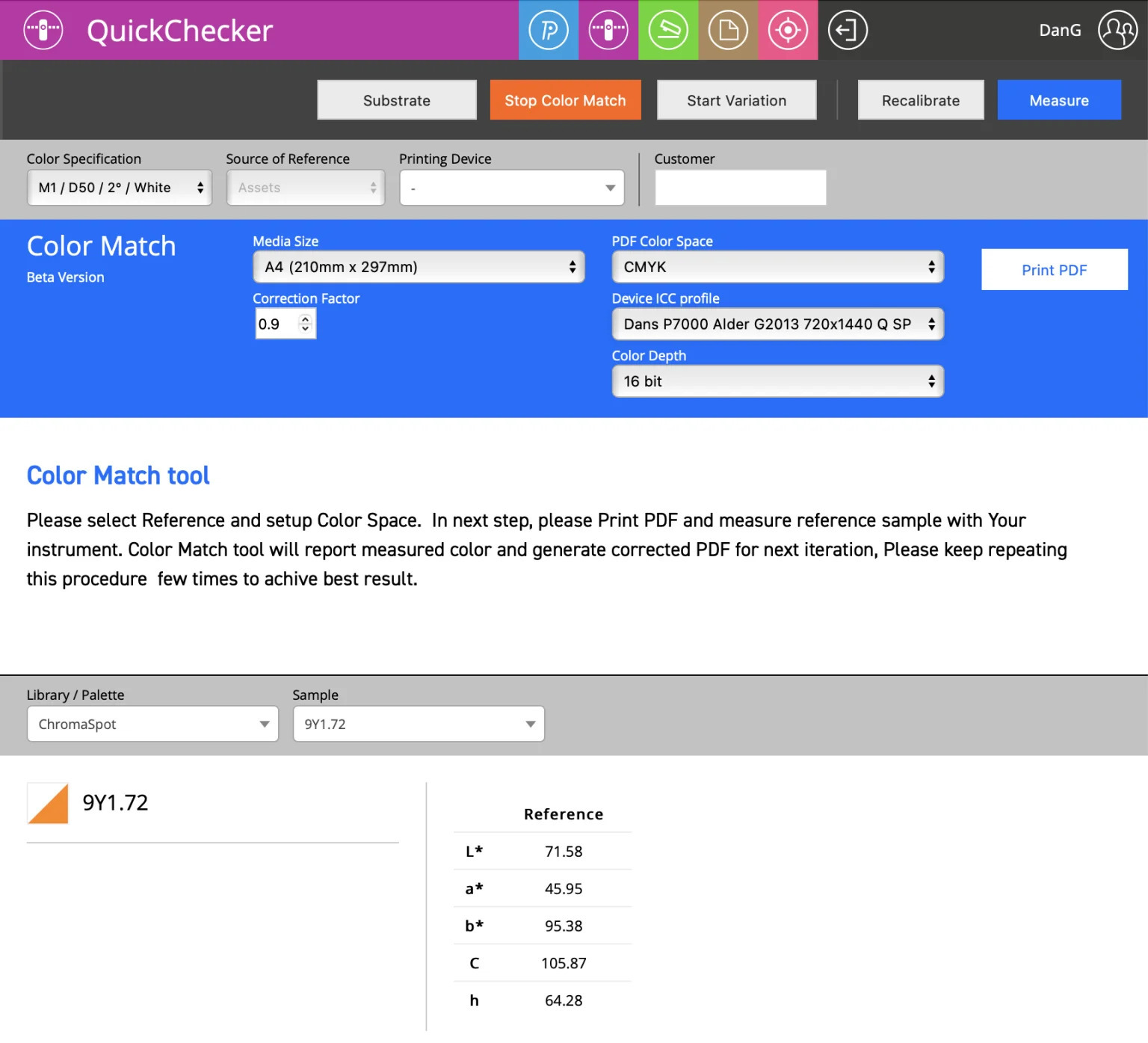
A walkthrough of spot color matching in ChromaChecker Capture: measure the target, check Delta E, and let automated corrections close the gap.
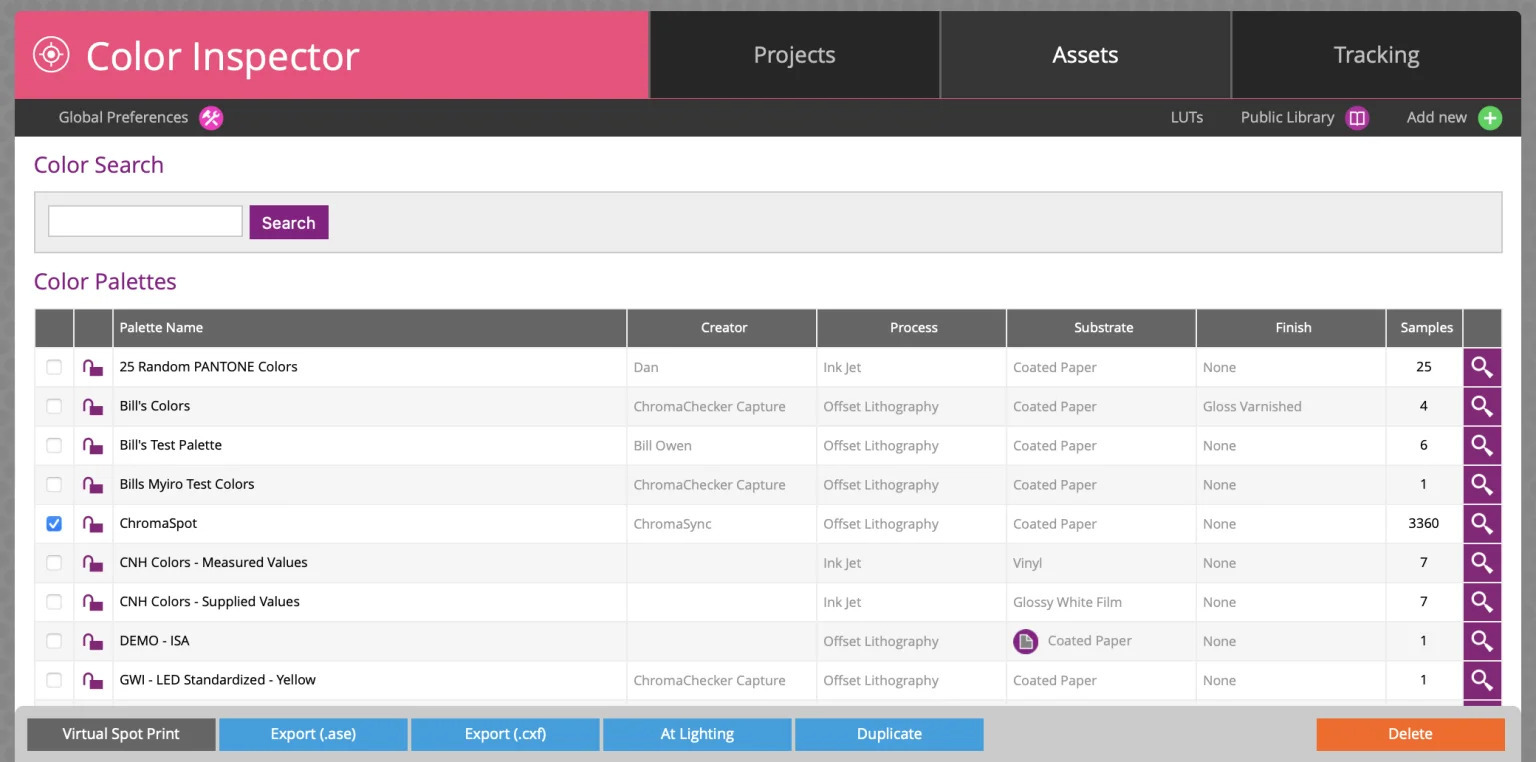
Virtual Spot Print shows whether your printer can hit a spot color before you print, using ICC profiles, spot color libraries, and Delta E analysis.
A rundown of the best ways to learn color management, from PRINTING United Alliance courses and G7 certification to ICC workflow training.
Where AI and machine learning could fit into color management, calibration, and print quality control, and what's realistic in the near term.
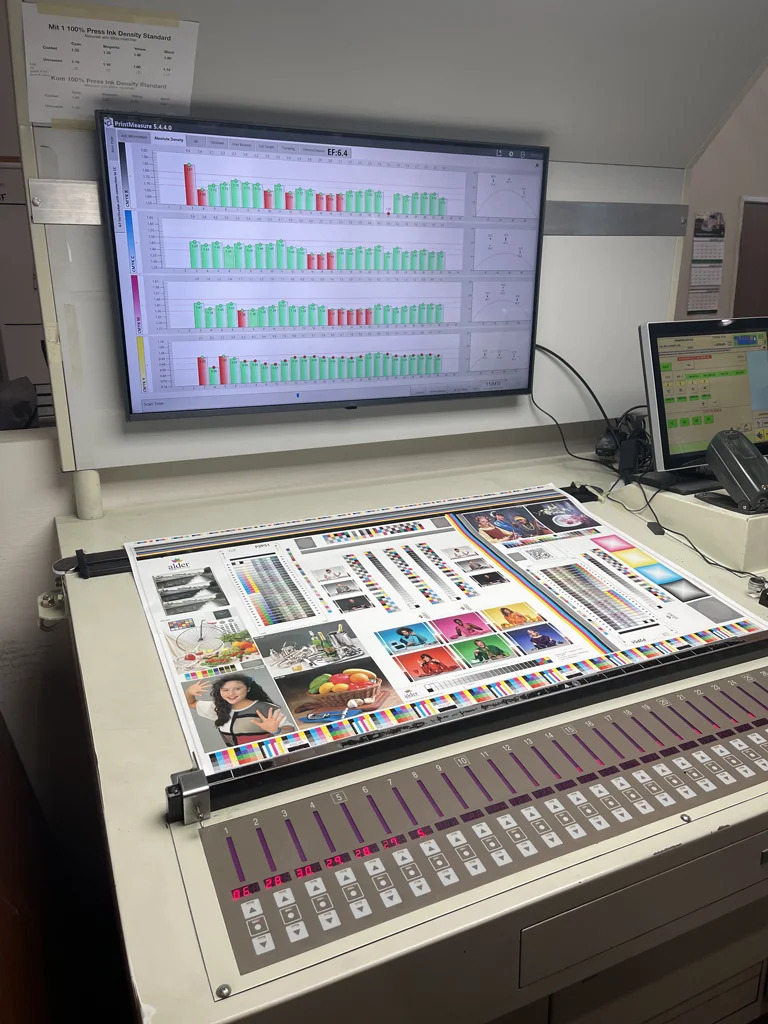
How the Alder Press Control Bundle, combining spectrophotometers, G7 process control, and cloud reporting, brought an existing offset press up to standard.
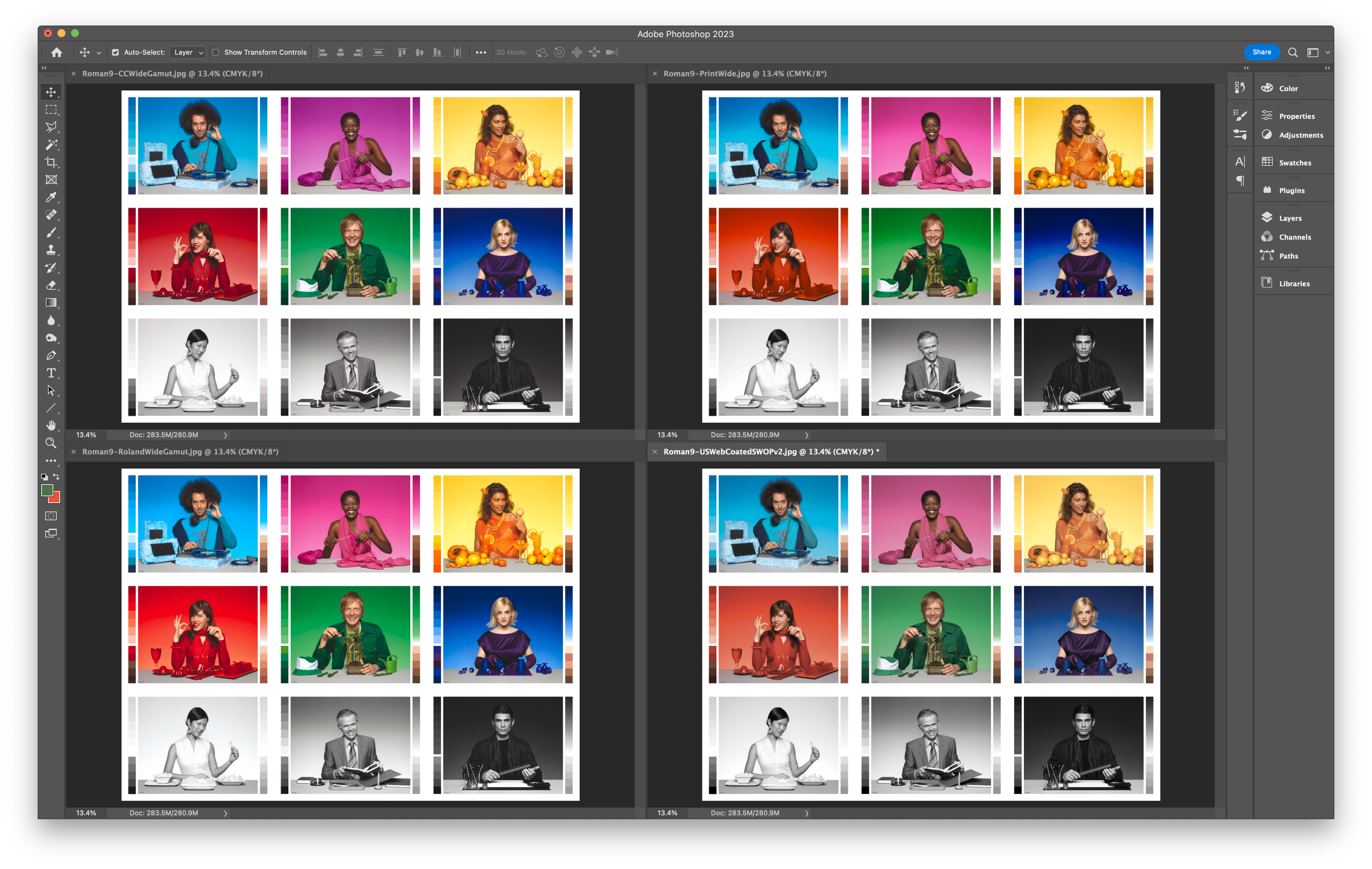
How wide gamut CMYK ICC profiles, source profiles, and RIP color management work together to get the most color out of your printer.
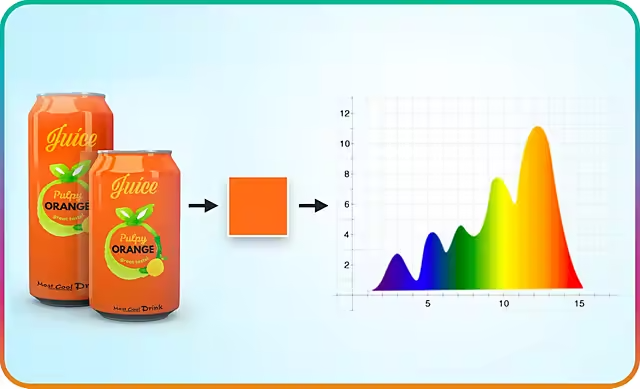
Adobe PDF Print Engine 6 brings spectral color data into the PDF workflow. What that means for spot color accuracy and where CxF files fit in.
Alder Color Solutions was recognized with a 2022 Best of Portland award for its digital print, color management, and customer support work.
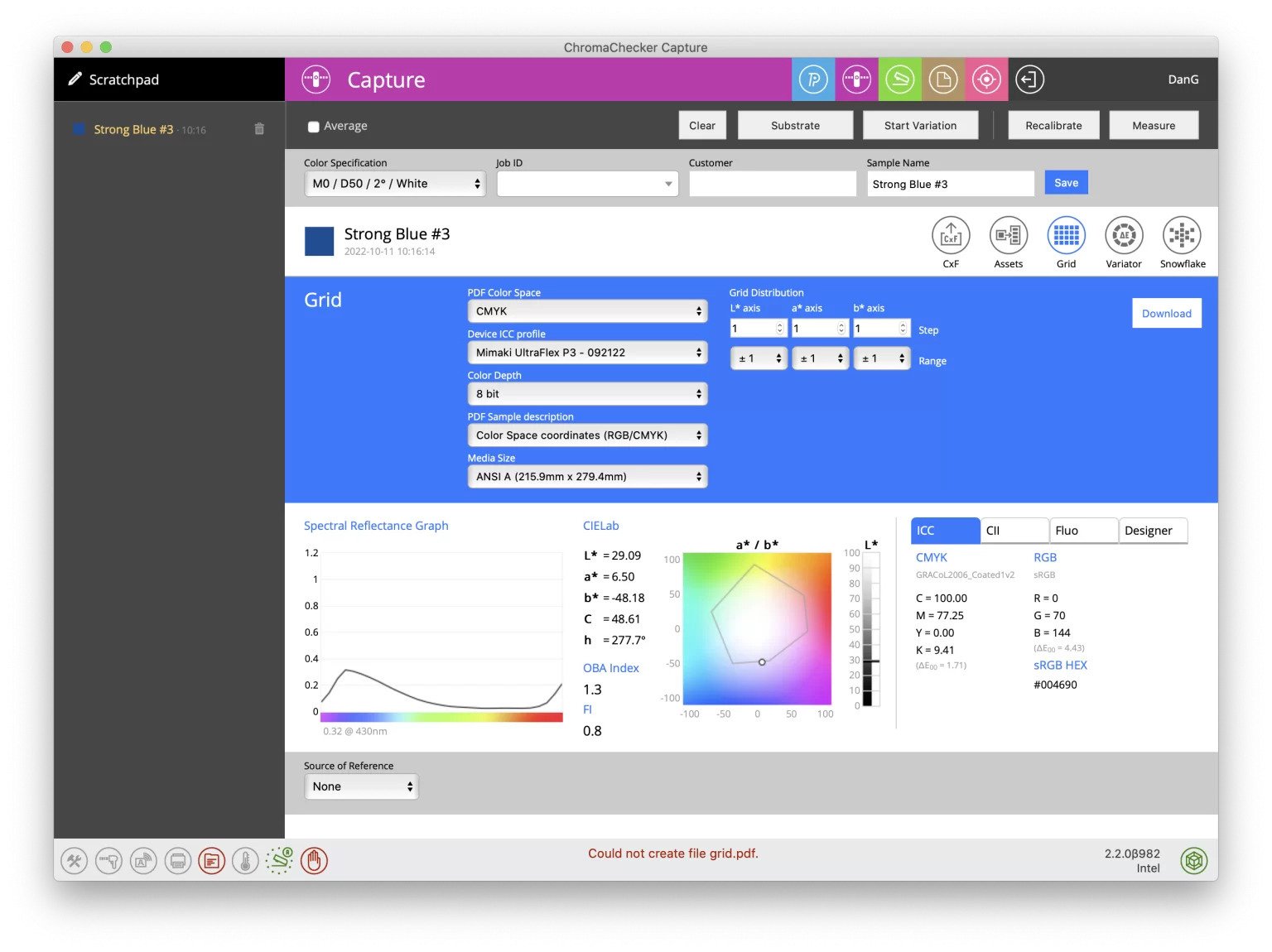
Why ChromaChecker Capture is our go-to for spot color matching, and how it uses spectral measurement, ICC profiles, CxF files, and Delta E analysis to hit brand colors.
Maintenance habits that keep wide format dye-sublimation printers running: printhead care, humidity control, and a preventative maintenance routine.
Part 2 goes deeper into dye-sub maintenance: capping stations, wiper blades, and keeping the ink system healthy.
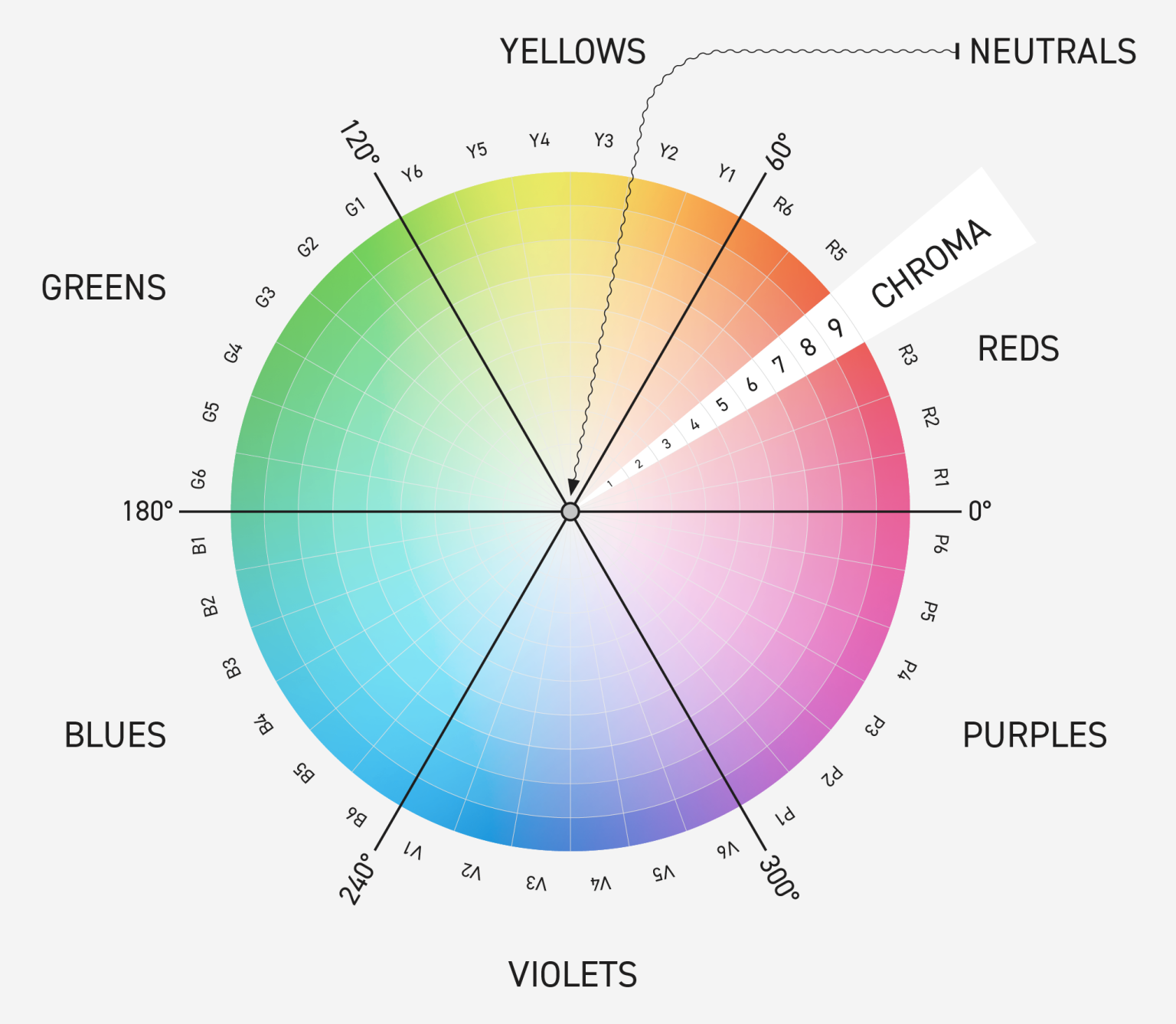
Why spectral color libraries and ChromaSpot are emerging as a modern alternative to Pantone for spot color in digital print workflows.
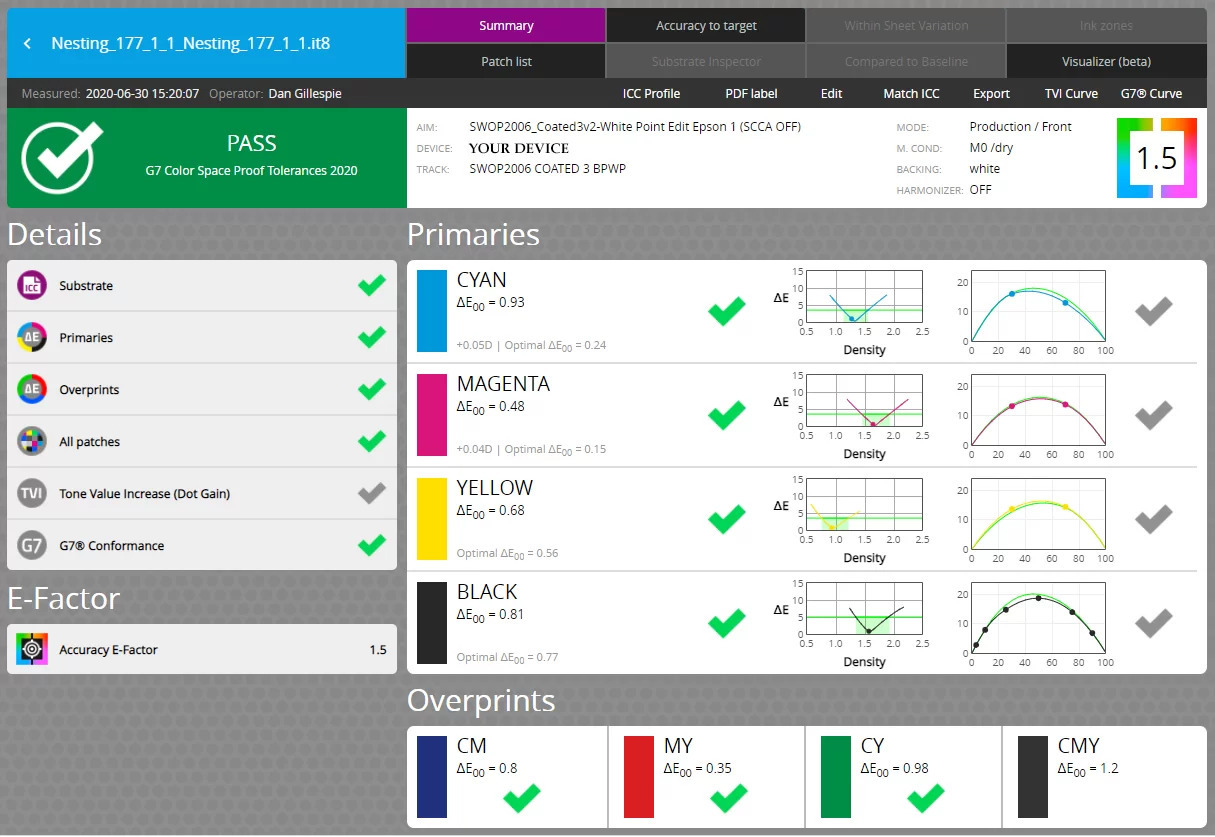
Remote, cloud-based press calibration keeps you G7-conformant without travel costs or a dedicated press run.
Alder Color Solutions is the first EFI Fiery for Display Graphics Premier Partner in the U.S., with certified expertise in Fiery workflow and color management.
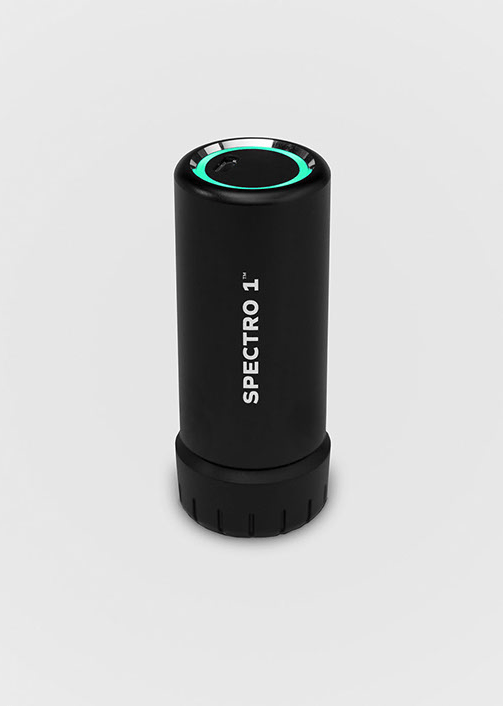
How the affordable Spectro1 measures L*a*b* values for quick print color verification and quality control.