PRINTING United Alliance just released a new dataset and profile for UV-curable inks on uncoated paper, called Alliance_UC_UV. This is significant, because it fills a real void in the current North American specifications. Until now we've had Characterized Reference Printing Condition #3 (CRPC3) — also known as GRACoL2013UNC_CRPC3 — which covers traditional solvent-based inks on uncoated paper. But there was no standard for UV inks on uncoated stock. The difference in color gamut between traditional offset process inks and UV inks comes down to their distinct formulations, drying mechanisms, and the way they interact with the substrate. If maximizing color gamut is a critical concern, UV printing often offers superior performance — and now, on uncoated stock, there's finally a characterized reference condition to print and verify against. You can download the dataset and profile from PRINTING United Alliance: Uncoated UV Dataset and Profile. Our sister company, Great Western Ink, makes both conventional and UV inks — and we can help you profile and verify to the right standard for either. Contact us for more information. Director of Technical Services, Alder Color Solutions Dan has spent more than three decades helping printers, converters, publishers, packaging companies, and photographers get control of their color — across offset, flexo, wide-format, digital, and packaging production. He founded the color consultancy ColorGeek Inc. in 1999 and joined Alder in 2018. A certified G7 Expert since the inaugural 2006 class, he has spent nearly twenty years implementing G7 and international print standards in real production environments, and was one of the few certified instructors for the SGIA Digital Color Professional program. He's also a professional photographer — which keeps him fluent in both the artistic and technical sides of imaging.The Gamut Difference, Visualized
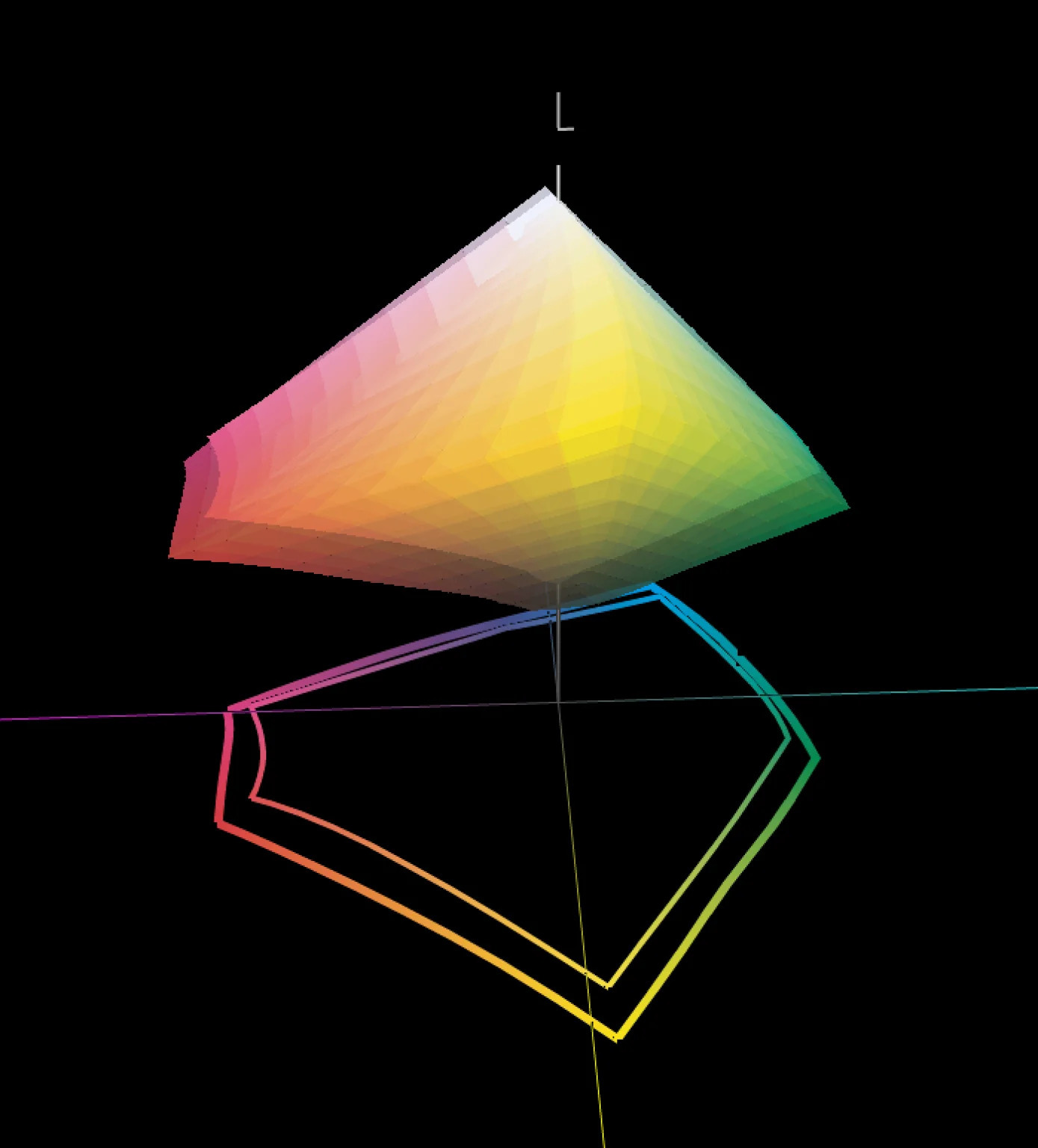
1. Traditional Offset Process Printing Inks
2. UV Printing Inks
Key Takeaway
Traditional offset inks
UV inks
Gamut
Narrower
Wider
Drying
Absorption + oxidation
Instant UV cure on the surface
Best suited to
Paper substrates
Non-porous and coated substrates
Vibrancy
Some loss from absorption
More vibrant and consistent
Download the Dataset
Schedule a Consultation
info@aldertech.comAbout the Author

Dan Gillespie